Federal BPS-11 to BPS-15 Interview Guide: Common Questions & Behavioral Guidelines
Securing a spot in the final interview phase for federal positions like Assistant (BPS-15), UDC (BPS-13), or LDC (BPS-11) is a major milestone. For departments like the Survey of Pakistan, where positions carry long-term career growth, structural promotions, and strong allowances, competition at the interview stage is highly precise.
Unlike private sector corporate interviews, federal panel interviews focus heavily on civic knowledge, institutional hierarchy, departmental awareness, and absolute psychological stability under pressure. This guide provides the exact breakdown of what to expect and how to conduct yourself.
Part 1: Behavioral & Professional Etiquette Guidelines
In a BPS-11 to BPS-15 interview, the panel (usually consisting of 3 to 5 senior officers) evaluates your personality, confidence, and stress tolerance before they even grade your technical knowledge.
1. The Entrance and First Impression
- The Dress Code: Dress in formal attire. For men, a clean, well-pressed Shalwar Kameez with a dark waist-coat, or a formal lounge suit with a tie. For women, a professional, sober-colored formal suit with a dupatta or hijab. Avoid flashy colors or casual footwear.
- The Entry Protocol: Knock gently and ask for permission to enter (“May I come in, Sir/Sirs?”). Walk in confidently, stand beside the candidate chair, and greet the entire panel with a clear Aasalam-o-Alaikum.
- Do Not Sit Immediately: Wait until the head of the panel asks you to take a seat. Once permitted, say Thank you, sit up straight, and maintain an upright, professional posture. Do not lean your elbows on the interview desk.
2. Body Language & Eye Contact
- The Triangle Tracking Method: When answering a question, look directly at the panel member who asked it for the first 60% of your response. Then, briefly shift your gaze to the other panel members to keep them engaged, before looking back at the original questioner to finish your point.
- Handling Nervousness: Keep your hands resting comfortably on your lap. Avoid tapping your feet, clicking a pen, or shifting constantly in your chair. The panel explicitly tracks these micro-movements to judge how you handle high-pressure environments.
Also Read About: Survey of Pakistan Career Growth Promotion Timeline, Postings, and Federal Allowances
3. Language Preference & Tone
- Be Clear and Subdued: Speak in a polite, respectful, and audible tone. Never interrupt a panel member. If they cut you off mid-sentence, stop immediately and listen.
- The Language Rule: Answer in the language the question was asked. If a panel member asks a question in English, attempt to answer in English. If they speak in Urdu, reply in Urdu. If you must switch languages, do so naturally without using complex jargon.
Part 2: Core Interview Question Categories
Questions for BPS-11 to BPS-15 roles are generally divided into four distinct quadrants. Prepare for each quadrant systematically:
Category 1: Introduction and Personal Background
The panel opens with these to break the ice and evaluate your basic communication framework.
- “Introduce yourself briefly.”
- How to Answer: Focus on your name, your city of domicile, your highest educational qualification, and any relevant technical skills (like typing speeds, MS Office mastery, or data tracking software). Keep it under 90 seconds. Avoid long personal family histories unless asked.
- “Why do you want to join the Civil Service instead of the private sector?”
- How to Answer: Emphasize job stability, the structured path of internal career progression, and the honor of directly contributing to a national federal institution.
- “You are overqualified for an LDC/UDC role. Why are you applying?”
- How to Answer: “Sir, I believe in starting from the ground up. This department offers an excellent time-scale regulation and structural promotion pathways. Entering as an LDC/UDC allows me to master the core administrative machinery of this department early in my career.”
Category 2: Departmental and Structural Awareness
You must research the specific department you are interviewing for. If you are interviewing for the Survey of Pakistan, you must know its structural role.
- “What do you know about this department?”
- How to Answer (Example for SoP): “Sir, the Survey of Pakistan is the premier national mapping and geospatial agency of the country, responsible for official surveying, mapping, and geodetic data infrastructure.”
- “Are you ready to be posted anywhere in Pakistan?”
- How to Answer: A hesitant answer here can disqualify you. Respond instantly and firmly: “Yes, Sir. As per federal rules, I am fully prepared and logistically ready to serve in any regional field office or station across the country where the department requires my services.”
- “What is the role of an Assistant / UDC / LDC?”
- How to Answer:
- LDC (BPS-11): Responsible for primary data entry, managing incoming/outgoing mail diaries, typing official letters, and maintaining file records.
- UDC (BPS-13): Handles file processing, cross-referencing past records, and assisting supervisors in clerical management.
- Assistant (BPS-15): Analyzes files, notes case histories, checks compliance with federal rules, and drafts initial summaries for gazetted officers.
- How to Answer:
Category 3: General Knowledge & Pakistan Affairs
Federal panels place immense weight on basic general knowledge and understanding of current national systems.
- “Explain the basic structure of the Federal Government.”
- Key Points to Mention: The separation of powers between the Executive (Prime Minister & Cabinet), the Legislature (Parliament: National Assembly and Senate), and the Judiciary.
- Basic Statistics and Local Geography:
- Know the name of the current Federal Minister and Secretary governing the ministry your department falls under.
- Be ready for quick questions regarding Pakistan’s borders, mountain peaks, major dams, or current economic indicators.
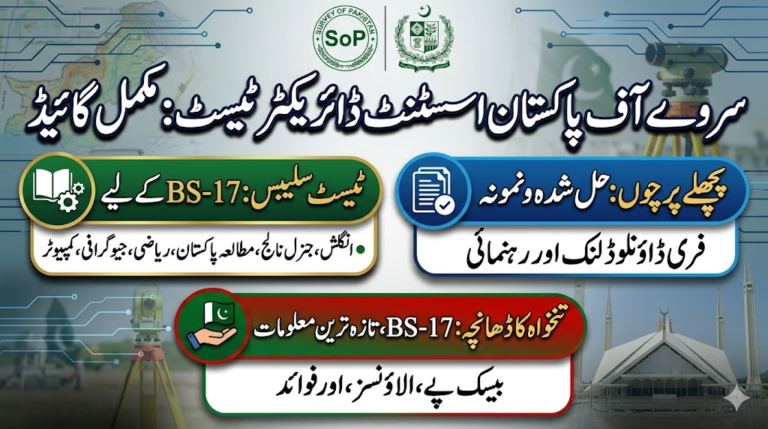
Also Read About: Survey of Pakistan Assistant Director Test Syllabus, Past Papers, and Salary Structure
Category 4: The Core Technical & IT Questions
For BPS-11 to BPS-15 desks, technical literacy is heavily cross-examined.
- “What is the difference between MS Word and MS Excel in an office workflow?”
- How to Answer: Word is utilized for drafting official notifications, letters, and memos. Excel is utilized for structural data logging, calculating budget sheets, tracking allowances, and maintaining personnel tables.
- “What are the shortcut keys for saving, copying, pasting, and undoing a document?”
- How to Answer: Ctrl+S (Save), Ctrl+C (Copy), Ctrl+V (Paste), and Ctrl+Z (Undo). Know your basic Windows shortcuts perfectly.
Part 3: Handling Tough Situations (The Stress Test)
- When You Do Not Know the Answer: Never guess or try to bluff a federal panel. They will immediately catch it. Instead, smile politely and say:“I apologize, Sir. I cannot recall this specific information right now, but I will look it up right after this interview.” This shows honesty, humility, and a willingness to learn.
- When a Panel Member Disagrees with You: If they challenge your opinion on a general knowledge topic, do not argue. Say: “Thank you for correcting me, Sir. I will update my information.”
Final Checklist for Interview Day
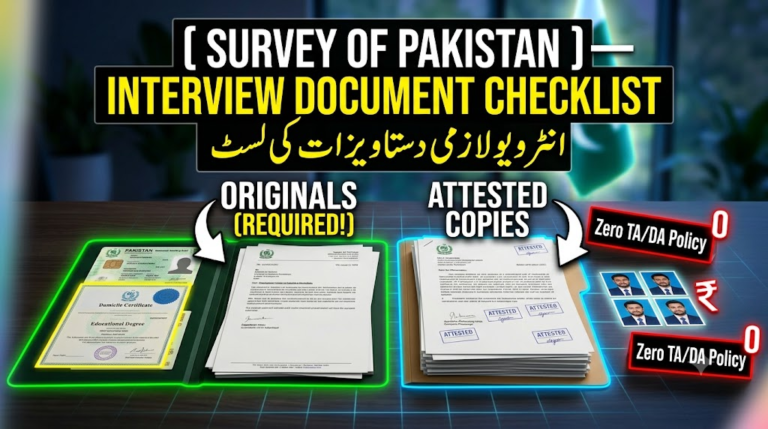
- Document Folder: Carry an elegant, organized file folder containing your original CNIC, Domicile, Degrees, Transcripts, and the official Interview Call Letter. Keep two sets of attested photocopies ready as a backup.
- Punctuality: Arrive at the designated interview center (e.g., Rawalpindi, Lahore, Karachi hubs) at least 45 minutes before your scheduled time slot. Late arrival creates immediate psychological panic and reflects poorly on your professional discipline.