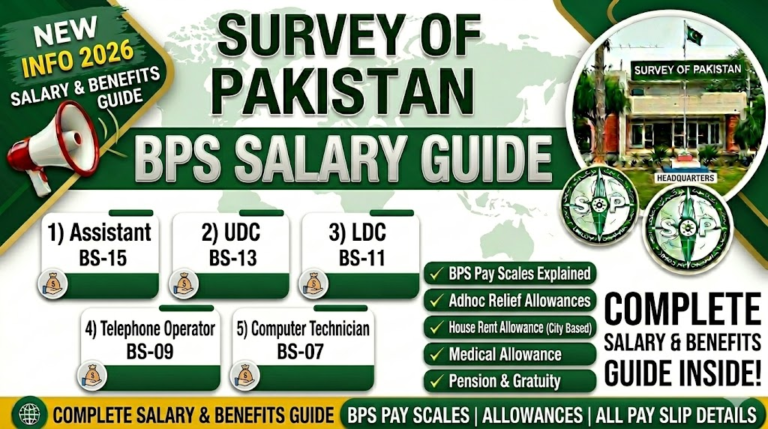
Federal Government Pay Scales Update 2026: BPS-01 to BPS-17 Allowances & Benefits Explained
Navigating the landscape of Pakistani civil service compensation can feel like solving a complex puzzle. Whether you are a newly appointed officer entering through the Federal Public Service Commission (FPSC), a departmental employee, or an aspirant trying to evaluate your future financial prospects, understanding the exact framework of basic pay, house rent, medical allowances, and ad-hoc mergers is essential.
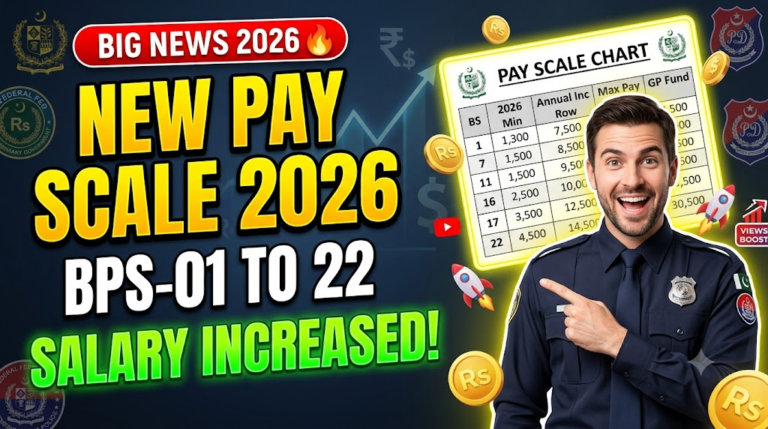
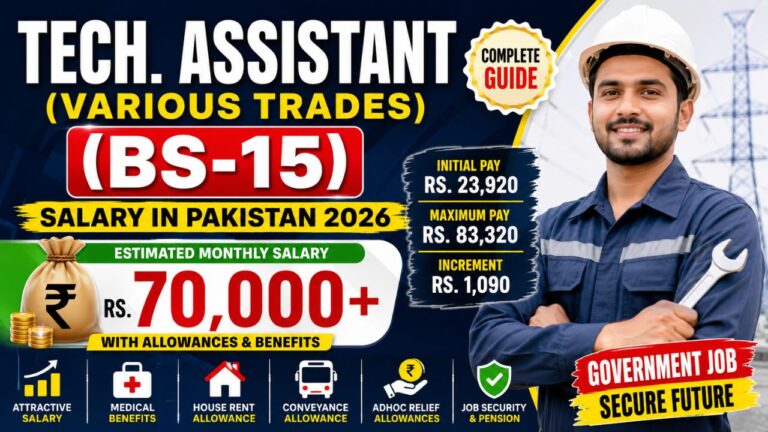
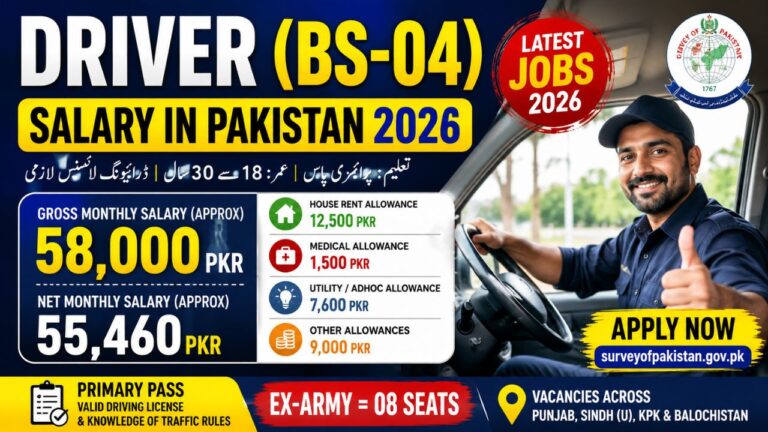
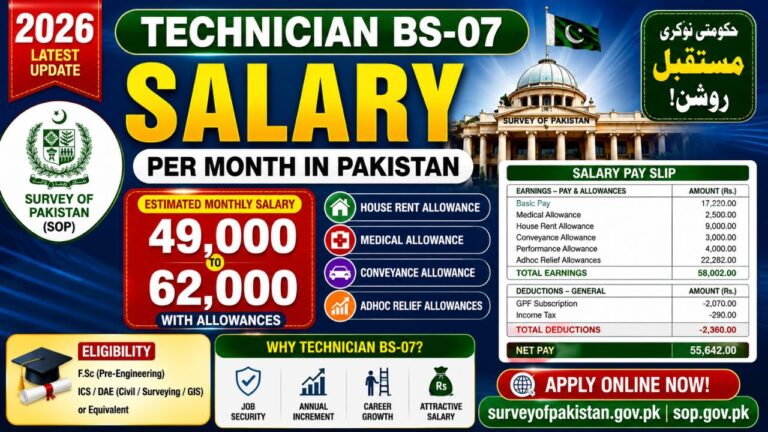
The Ministry of Finance has officially notified the Revised Basic Pay Scales (BPS) for Civil Servants. This comprehensive guide breaks down everything you need to know about the pay structures, calculations, and allowances for BPS-01 to BPS-17 under the latest framework.
1. Understanding the 2026 Pay Scale Revision: What Changed?
The government’s financial package introduces structural changes aimed at rationalizing inflation pressures and streamlining employee compensation. The core of this overhaul involves restructuring the basic pay matrix by merging older relief allowances while introducing fresh relief measures.
Key Highlights of the Compensation Overhaul:
- Merger of Past Reliefs: The previous 15% Ad-hoc Relief Allowance of 2022 and the 10% Ad-hoc Relief Allowance of 2025 have been officially merged into the basic pay structure as of June 30, 2026. This significantly elevates the starting point of your gross calculations.
- Fresh Ad-Hoc Relief: A brand new 7% Ad-hoc Relief Allowance has been granted on the running basic pay of the new scales effective from July 1, 2026.
- Conveyance Allowance Hike: A massive 50% increase in conveyance allowance has been implemented across BPS-01 to BPS-22.
2. BPS-01 to BPS-17 Structure: Basic Pay Progression
Under the revised framework, point-to-point basic pay fixations ensure that existing employees transition smoothly without financial loss. Below is an overview of how basic pay floors look across key representative tiers:
| Pay Scale (BPS) | Previous Minimum Basic Pay (2022 Structure) | Revised Minimum Basic Pay (2026 Structure) |
| BPS-01 | Rs. 13,550 | Rs. 16,280 |
| BPS-05 | Standard Tier Entry | Scaled Up Post-Merger |
| BPS-11 | Mid-Tier Administrative | Scaled Up Post-Merger |
| BPS-17 (Gazetted) | Entry Officer Cadre | Substantially Enhanced Floor |
Note: Annual increments continue to fall due on December 1st of each year according to established civil service code rules.
3. Major Allowances & Benefits Breakdown (BPS-01 to BPS-17)
Your take-home salary (Net Salary) is a combination of your basic pay plus a series of federal allowances. Let’s look closely at how they are calculated:
A. Conveyance Allowance (Revised Rates)
The government increased the conveyance allowance by 50% to combat fuel and public transport inflation:
- BPS-01 to BPS-04: Increased to Rs. 2,678 per month (from Rs. 1,785).
- BPS-05 to BPS-10: Increased to Rs. 2,898 per month (from Rs. 1,932).
- BPS-11 to BPS-15: Increased to Rs. 4,284 per month (from Rs. 2,856).
- BPS-16 and BPS-17: Increased to Rs. 7,500 per month (from Rs. 5,000).
B. House Rent Allowance (HRA)
House rent is calculated as a percentage of the Minimum Basic Pay depending on whether the employee is posted in a specified large city (Islamabad, Rawalpindi, Lahore, Karachi, Peshawar, Quetta, etc.) or a general station. Generally, it ranges between 30% to 45% of the basic pay scale base, subject to the availability or non-availability of government accommodation (House Rent Subsidy).
C. Medical Allowance
Federal employees across BPS-01 to BPS-17 receive a fixed standard medical allowance (historically set at 15% of basic pay or standardized caps), allowing outpatient medical coverage unless specialized departmental medical frameworks apply.
4. Step-by-Step Guide: Calculating Your Net Salary
If you are trying to estimate your monthly take-home amount, follow this systematic troubleshooting workflow:
- Determine Your Base: Locate your exact current stage in the revised basic pay scale chart.
- Add Regular Allowances: Compute House Rent Allowance, Medical Allowance, and Conveyance Allowance based on your specific BPS tier.
- Incorporate Ad-Hoc Reliefs: Factor in the newly integrated 7% Ad-hoc Relief Allowance calculated directly over your running basic pay.
- Deduct Mandatory Taxes & Funds: Subtract professional tax, Benevolent Fund contributions, and Group Insurance deductions as per federal standard schedules.
5. Common Mistakes to Avoid When Estimating Government Salaries
- Relying on Old Calculations: Failing to merge the 2022 and 2025 ad-hoc reliefs will lead to heavily undercalculated salary estimates. Always use the post-June 2026 baseline.
- Ignoring Station Classifications: Assuming HRA is uniform across the country. Remember that large metropolitan areas carry a higher HRA percentage than smaller or remote districts.
- Confusing Gross vs. Net: Do not mistake your gross emoluments for your take-home pay. Benevolent funds and income tax withholdings change your final liquid cash total.
Conclusion
The updated compensation framework for 2026 provides a much-needed financial cushion for civil servants across BPS-01 to BPS-17, directly addressing economic shifts through strategic ad-hoc mergers and conveyance hikes. By keeping your calculations aligned with the latest Ministry of Finance notifications, you can accurately plan your financial future, career trajectory, and professional goals in the public sector.